
You hear it once, then it's gone
A student reads aloud for ninety seconds and the evidence disappears. There is no way to compare today's reading to last month's.
Assign a passage, listen to short read-alouds, and score observable reading behaviors. The scorecards, growth trends, and family summaries build themselves.
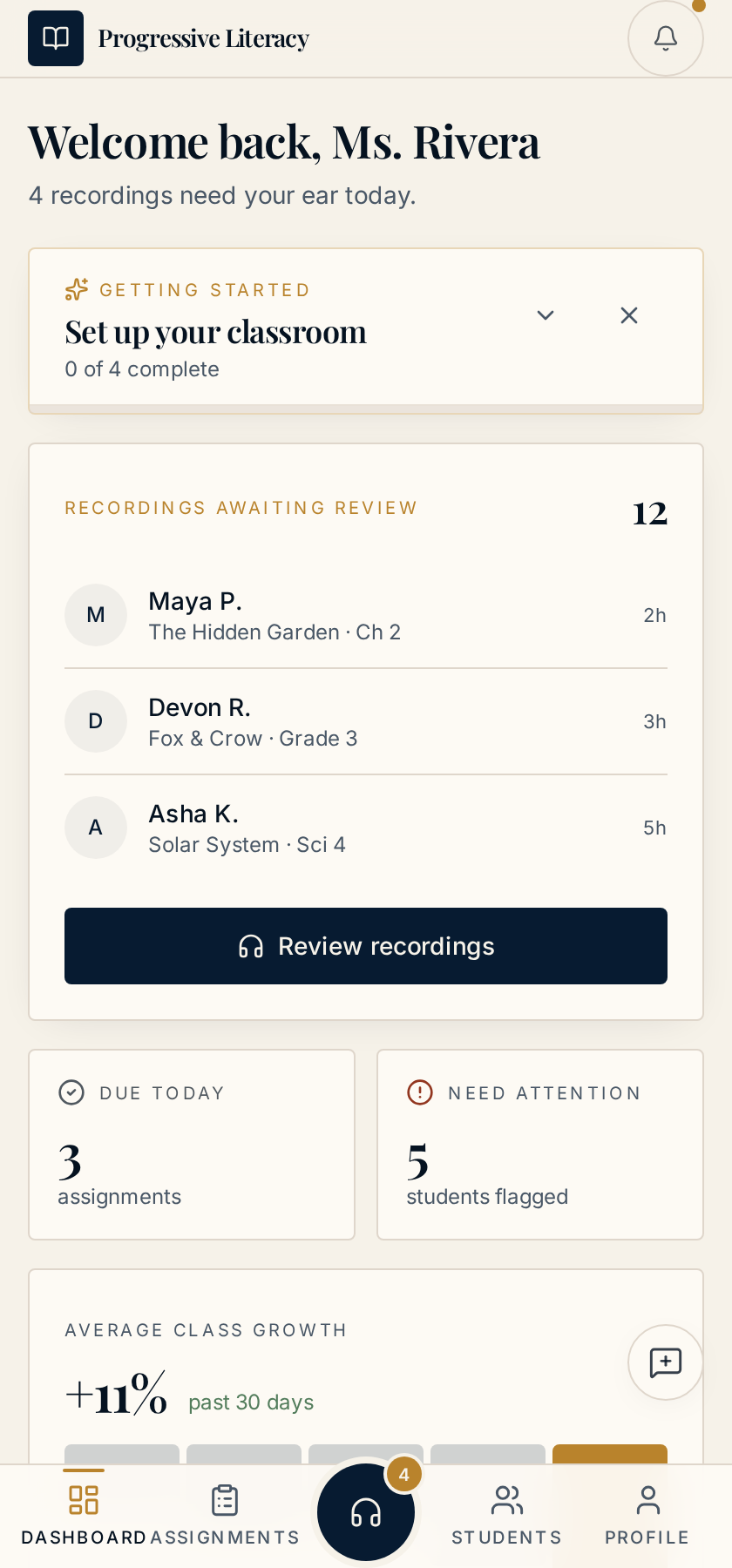
Your day starts with one number: how many recordings are waiting for your ear.
The problem
Reading behavior is the hardest thing to observe at scale — and the most useful thing to coach.
A student reads aloud for ninety seconds and the evidence disappears. There is no way to compare today's reading to last month's.
Twenty-four readers, one of you. Most students go weeks without a real listen and targeted feedback.
A composite score says a reader is behind. It doesn't say which observable reading behavior is the right place to intervene.
Writing a progress note for every reader is unpaid overtime. Growth evidence should assemble itself.
Inside the app
Real screens from the teacher experience — no mockups.
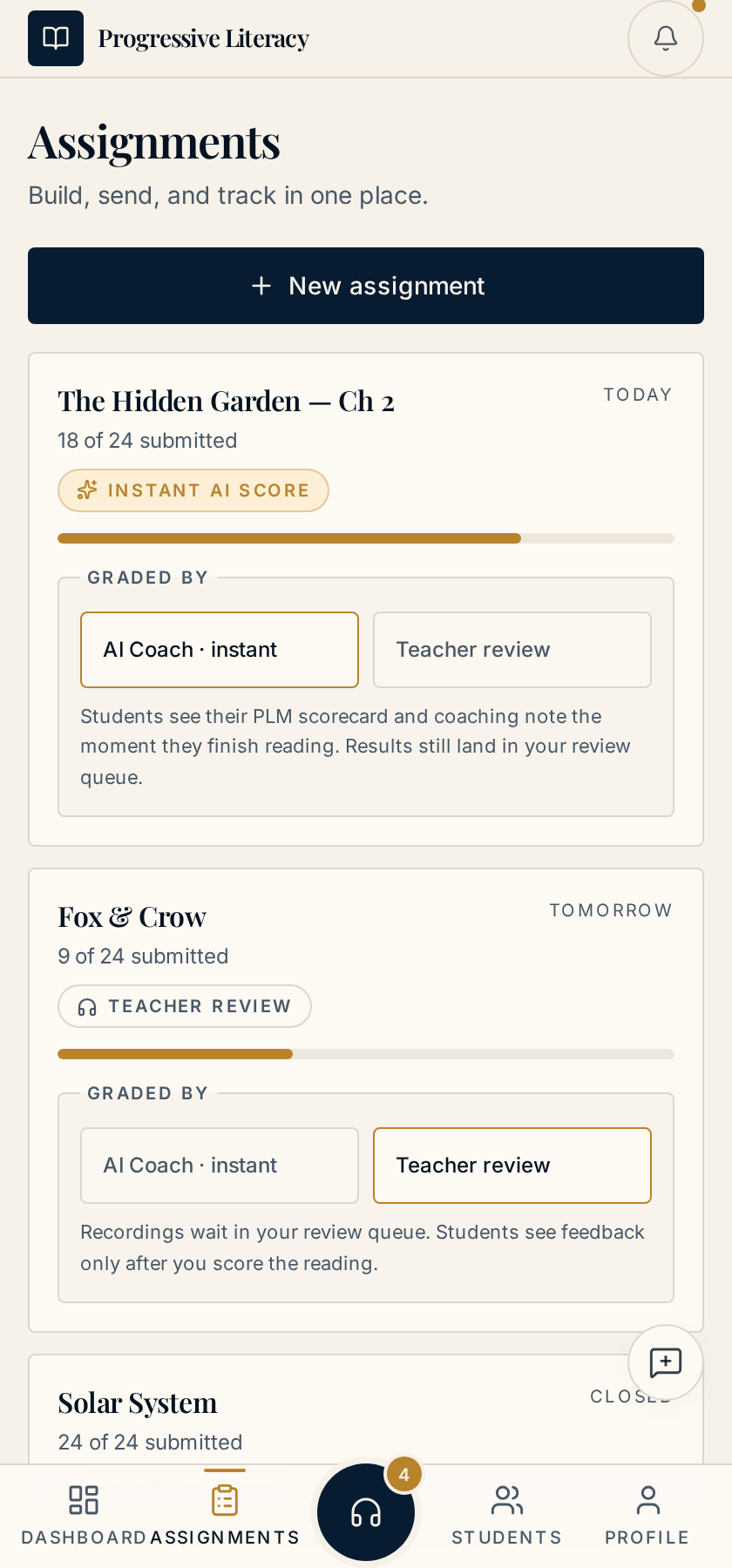
Create an assignment in a few taps: passage, due date, and how it gets graded.
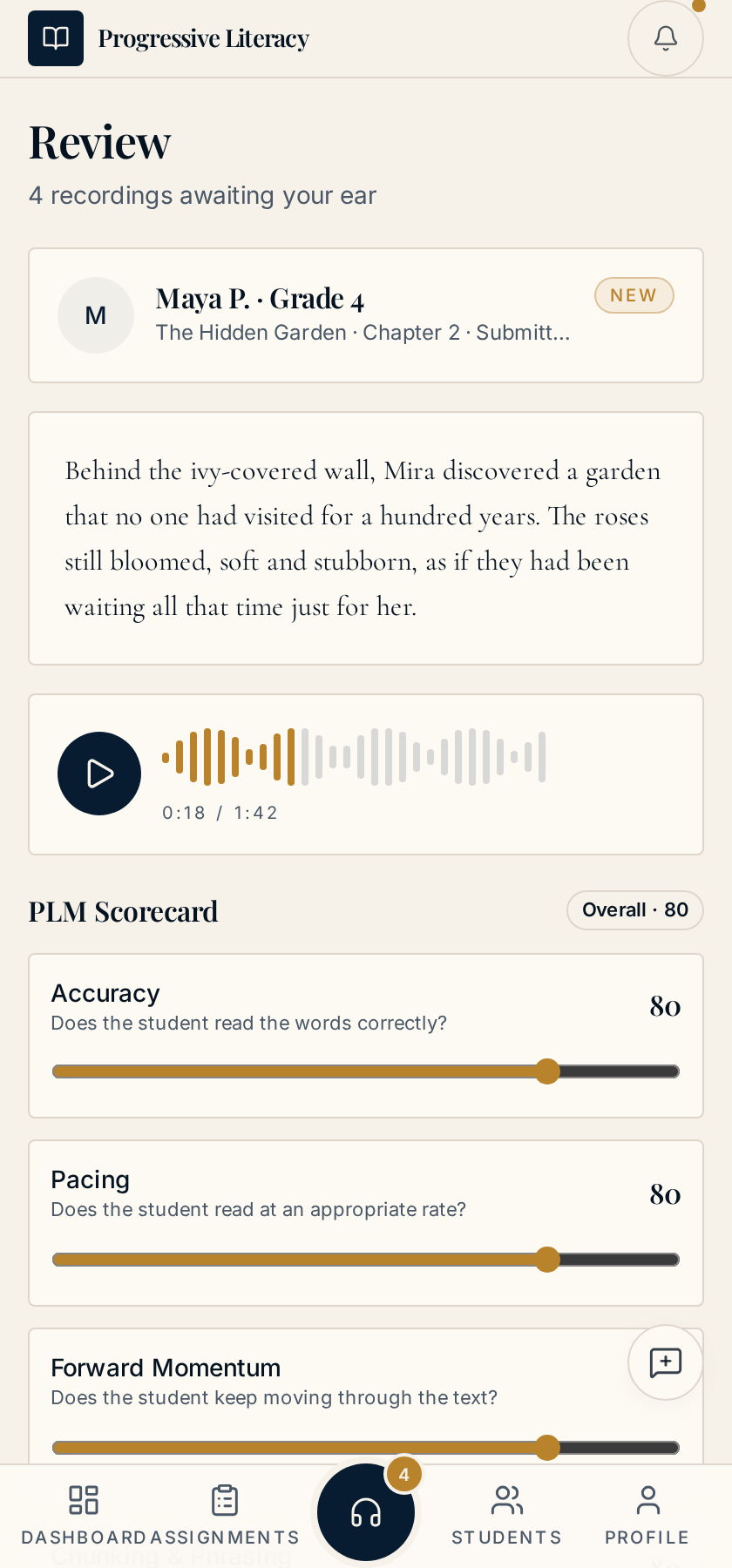
Listen with the passage in view and score the behaviors as you go.
What you can do
Everything you need to turn read-aloud practice into visible growth — in one place.
Create your roster, invite students with a class code, and choose their grade and reading levels. No spreadsheets or IT setup required.
Use built-in fiction and nonfiction passages for every grade, or paste your own text — a novel excerpt, an article, or your content-area reading.
Pick teacher-only review, AI-assisted feedback, or a combined mode. You stay in control of what students see and when.
Listen to each read-aloud while viewing the passage. Score and comment in one screen, so a class set takes a single planning period.
Every score automatically rolls into a student scorecard and trend line. Compare fiction and nonfiction growth over time.
Turn scores into plain-language summaries that tell families what was heard, what to practice, and what changed.
The PLM framework
The full behavior framework is introduced in the Progressive Literacy Model book. Inside the app, teachers score and coach around the same observable behaviors.
The Progressive Literacy Model is built around a small set of observable reading behaviors that teachers hear and score during read-aloud practice.
The book introduces the full framework, the research behind it, and how to use it in the classroom.
Family communication
Every scorecard converts into plain language a family can read in thirty seconds.
A short, specific description of how the reading sounded this week.
One behavior named as the focus, with a practice suggestion for home.
Growth since the last recording, shown as a simple up, down, or steady trend.
Plans
No contracts for individual educators. Cancel any time.
Try the full cycle
one teacher, one full roster
campus & district rollout
Educator FAQ
Most teachers review a 60–90 second read-aloud in about two minutes: listen once, move five sliders, and leave one focused comment. A class set is typically a single planning period.
Create an educator account, add one class, and run the cycle with a single passage.